

ChileSkiing in the land of volcanoes
There are places in the world where skiing is more than just a sport, it's a deep sensory experience, a constant dialogue between nature and the Earth's power. To live and ski in such an environment is to embrace duality: the sublime and the wild, the predictable and the unpredictable, the beautiful and the dangerous. Here, the land is not static. It moves, breathes, speaks.

At the heart of the Pacific Ring of Fire, hundreds of volcanoes rise from the fertile valleys of the Andes Mountains. Some lie dormant, while others smoke and explode, making this territory a unique experience of connection with the Earth’s core. Reading ancient and recent eruptions, where the traces of old lava flows are hidden beneath the snow of winter and spring gives backcountry skiing an entirely different dimension.

In this article, Fritschi athlete Eduardo Retamales intoduces you to the Araucanía region in southern Chile, where he lives and works professionally as a mountain guide and adventure photographer.
Chile, and more specifically the Andes mountain range, is one of the areas with the highest concentration of active volcanoes on the planet. In southern Chile, names like Villarrica, Llaima, Osorno, Lonquimay, Lanín, Mocho-Choshuenco, Antuco, Nevados de Chillán (Old and New), among others, rise between ancient forests of araucarias, lengas, and coigües. At their feet, glacial lakes reflect perfect snowy cones and valleys coated in volcanic ash.
It’s impossible to look around without feeling like you’ve stepped into a prehistoric landscape. The shapes, colors, and textures and everything is sculpted by past eruptions and by the constant interaction between snow, lava, wind, and forest. Every volcano tells its own story: some with open craters where, on occasion, you can see magma surfacing turning the ski touring experience into something otherworldly.

According to the Mapuche people, the original inhabitants of the region, volcanoes are known as pillanes (in Mapudungun, the Mapuche language) spirits that dwell within them. One example is the Villarrica volcano, or by its original name Ruka Pillán, meaning "house of spirits.”
A Day of Ski Touring on the Volcanoes
One of the most remarkable features of this region is the possibility of climbing a volcano in a single day and skiing down from the crater. In this land of contrasts, it’s possible to experience a full day of ski touring that begins at dawn among frozen trees and ends with a perfect descent from the peak. The key lies in planning, terrain knowledge, and the willingness to rise early.
With your backpack prepared the night before, the first steps are silent. A headlamp cuts through the darkness of the forest as skins crunch over the still-frozen snow. The sounds are minimal: skis gliding, your breath, the occasional night bird.


As you emerge from the tree line, the volcano’s cone is fully revealed. A broad slope, sometimes gentle, sometimes technical stretches up to the crater. As you gain altitude, the snow changes, the wind shifts. Dawn shadows dance across the slope. This is where the real challenge begins: adapting to constantly changing snow conditions switching between heavy “Araucanian powder” ice, crust, and more.

When the volcano you choose is active (such as Villarrica or Llaima), the crater smokes and the air is filled with the scent of sulfur. From the summit, you can see other volcanoes in all directions, deep blue lakes, and valleys still shrouded in mist. There is no sound but the wind hitting your jacket. The crater is often warm, with heat visibly rising through cracks.
Few pleasures compare to making the first line down a volcano you’ve climbed under your own power. From summit to base, with an average vertical drop of 1,500 meters, you ski knowing you are in one of the most dynamic landscapes on Earth.


With tired muscles and your heart still at the top, you return to the forest. The crunch of snow under your boots reminds you that it was all real.

A Few Considerations: Technique, Risk, and Precision
Skiing on volcanic terrain demands constant attention. Physical fitness alone is not enough. These mountains change every day.
Unpredictable snow conditions: Direct solar radiation on exposed slopes, geothermal activity beneath the surface, constant wind, and slope orientation can mean encountering four types of snow in a single descent. Volcanoes in this region are exposed to extreme weather conditions. These isolated mountains take everything head on.
Volcanic monitoring: In active zones, it’s essential to check seismic activity reports. Local volcanology observatories report the alert level, which is crucial before planning any ascent. Recently, in December 2024, access to Villarrica´s volcano summit was reopened after being closed for two years due to volcanic activity.
Gear choice: Lightweight gear is critical since the Andes lack extensive mountain infrastructure. Ski lifts and refuges are scarce. You carry everything yourself so your gear matters. Personally, I use Tecton 13 or Xenic bindings depending on the day’s “mission” both excellent for these kinds of environments.
Safety: While avalanche risk can be sometimes lower in some zones, local slides, cornices, and snow variation can be deceptive. ALWAYS carry the proper safety gear: avalanche transceiver, shovel, probe, radio, and helmet.


- New

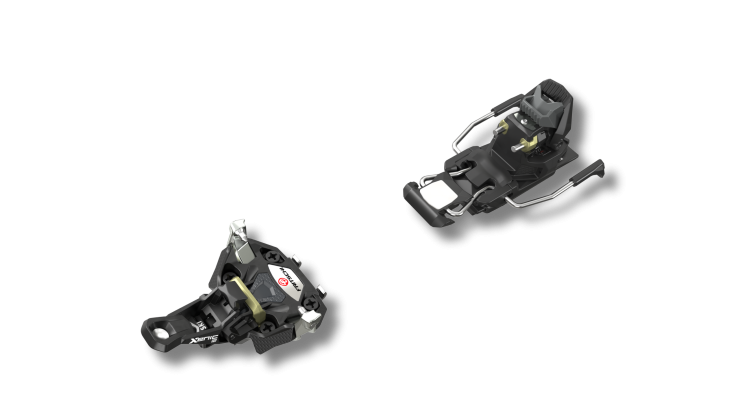
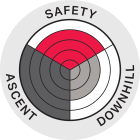 TouringSystem: Tech binding with rotating, widely supported heel unit, Fritschi Safety SystemThe most complete lightweight binding for high-mountain skiers with added downhill performance and safety.


- New

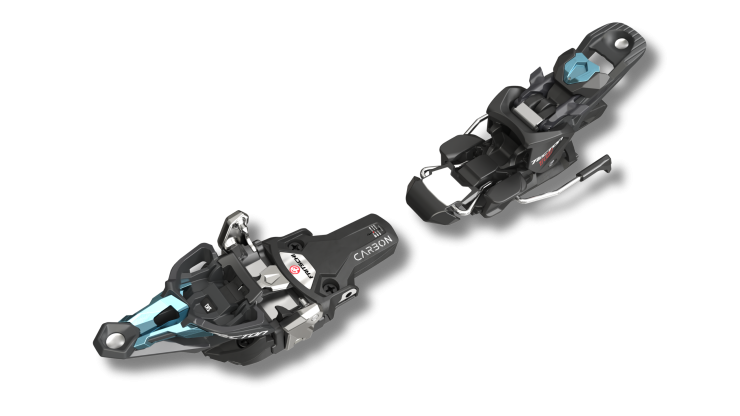
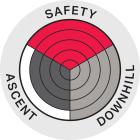 Freeride & Free TouringSystem: Hybrid tech pin-binding with fixed alpine heel piece, Fritschi Safety SystemFor freeskiers seeking active, dynamic skiing adventures in challenging terrain.


Living Nature, Eternal Respect
Living and skiing among volcanoes is also a lesson in humility. These giants, like all mountains have been here long before us. Some have erupted in recent years. Others sleep with one eye open. Moving through their slopes is walking across living geological history.
It’s also a deep connection with nature. The ancient trees, the condors soaring above the summit, the fumaroles rising on cold days, the silent glaciers, everything demands absolute respect. To tread carefully, to minimize impact, to be grateful for the privilege of being there.
Volcanoes are not just mountains. They are experiences of fire beneath your feet and snow beneath your skis. Of pure lines and unforgettable days. And of a life connected to the essentials: the Earth, time, body, and silence.

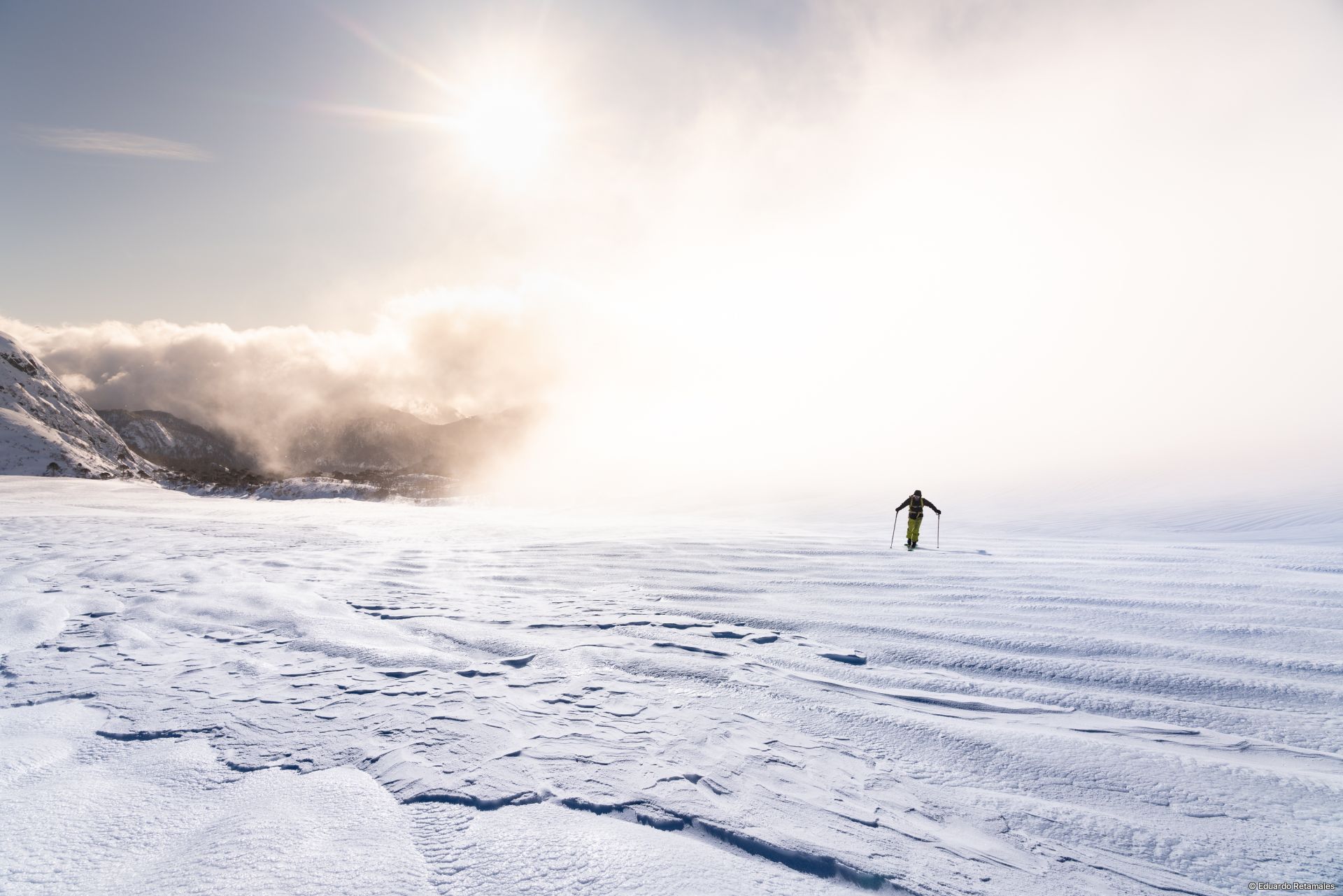
Eduardo Retamales Fritschi ambassador
Eduardo Retamales is a mountain guide of the National Association of Mountain Guides of Chile who joined the Fritschi family a year and a half ago.
In addition to constantly guiding in the Araucanía region of southern Chile and leading expeditions throughout the country, he works professionally as an adventure photographer, specializing in documentary photography of climbing (in all its disciplines), mountaineering, and skiing.
His passion for living a life close to the mountains was discovered while beginning his studies as an architect, where he also discovered photography as a means of artistic expression.
Photography and mountaineering have always gone hand in hand, and today they are two professions to which he dedicates 100% of his time.
Although his sporting career hasn't revolved around competitive skiing or big freeride lines, he became familiar with skiing as a means of accessibility for his work as a guide and photographer, focusing on what he loves most: exploring winter terrain, whether guiding or documenting.
Gratefully (in his own words), he joined the Fritschi family, where he found not only a brand that has developed major advancements in ski touring binding technology, but also a great group of people with he has worked during this time.
Eduardo uses two types of bindings, depending on the purpose of his "mission." Tecton 13 is his base binding due to its great versatility, safety, and ease of use.
When the project calls for lightness, he opts for Xenic, which, in his words, is a very minimalist and precise version of what is sought in a ski touring binding, especially due to its responsiveness, low weight, safetyness and ease of maintenance.
Eduardo is currently working on his next winter project, which will take him to the northern ice fields of Chilean Patagonia.

Further links
- Instagram:Eduardo Retamales
- Fritschi Athletes
More news
 Safety GearFritschi touring bindings distinguish themselves through new technological solutions. In a nutshell: strong on the descent and uncompromising in the ...
 Ski touring with the familyAs ski touring has evolved, so has the need to experience ski touring with the kids. But what is there to consider? What is important so that the ...
 What is a DIN-Value?The Correct DIN-/Z-Value Setting in Ski Touring Bindings: Safety and Performance in Focus.